



















Member Blog: Meet the Quokkas
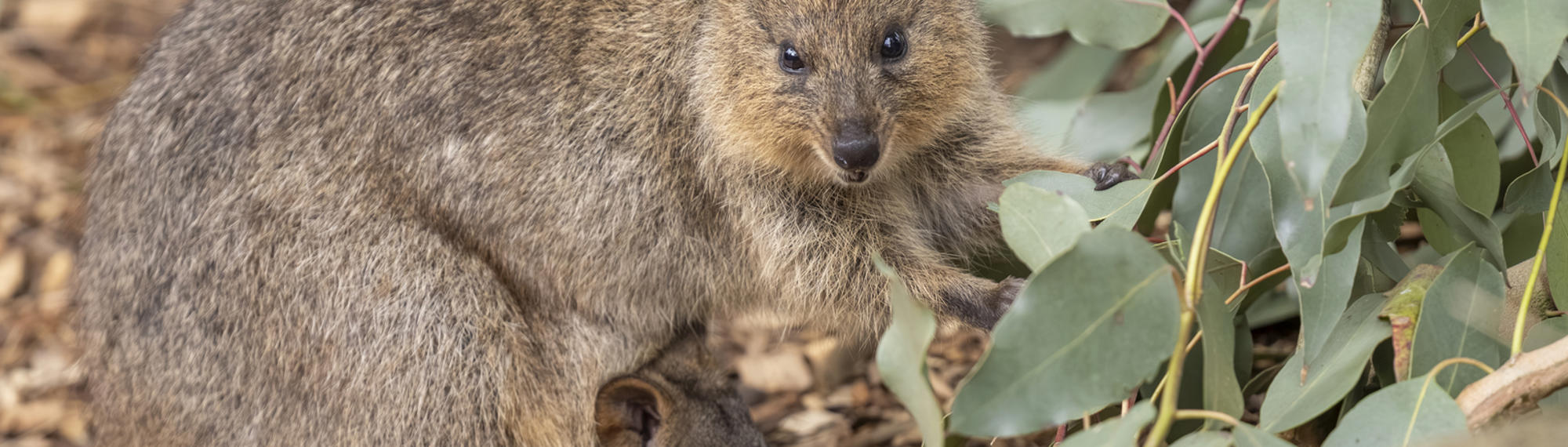
Melbourne Zoo has welcomed a (slightly smiley) spring joey.
Betty Quokka's baby girl has emerged from her mum's pouch – a fuzzy bundle who is "about the size of a grapefruit", joining Betty and Abe's family at the zoo.
"There's a lot of squealing from visitors around that habitat," says Keeper Tim. "Especially seeing how cute that little one is."
Baby Quokka is yet to be named (the public will get to name in her a competition – stay tuned for that), but she's already got a reputation for being a curious joey with a big appetite.
"She would have been in the pouch for about six months, we noticed her pop her little head out about a month ago," says Keeper Tim. "We saw her nibbling on food we left in habitat, little leaves and flowers."
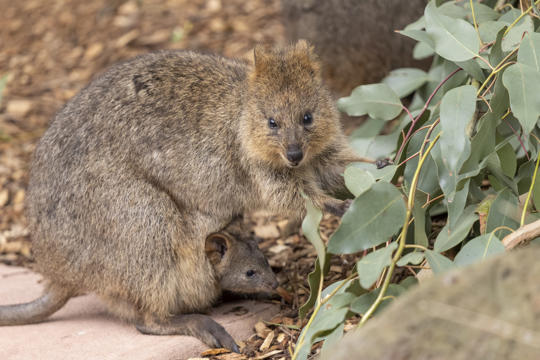
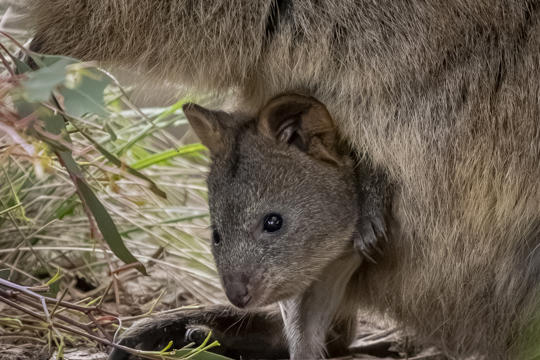
Quokkas give birth just 27 days after mating. Betty is already proving to be a very vigilant parent. Abe, the male quokka in the habitat, is also surprisingly vigilant - maybe too vigilant.
"Betty is a great mum, she's very protective," says Keeper Tim. "She lets her joey roam around, but as soon as she starts to move a little bit far in the shrubs, Betty goes over and keeps an eye on her. Abe is also very protective, which we've just discovered! But throw a few little treats in there and they all come together."
Quokkas are a species that Zoos Victoria are determined to see thrive. They're currently listed as vulnerable due to predation from feral animals, especially on the mainland. Native to Western Australia, this small wallaby is extremely resourceful and equipped to thrive in hot and arid environments. Rottnest Island is home to the world's largest population of quokkas, over 10 thousand.
Quokkas are often referred to as the "happiest animals on the planet" and it's fair to say Melbourne Zoo is already going crazy for this furry family. Betty, Abe and Baby Quokka can be seen in the koala habitat beside the Great Flight Aviary.